Ruling the Heart
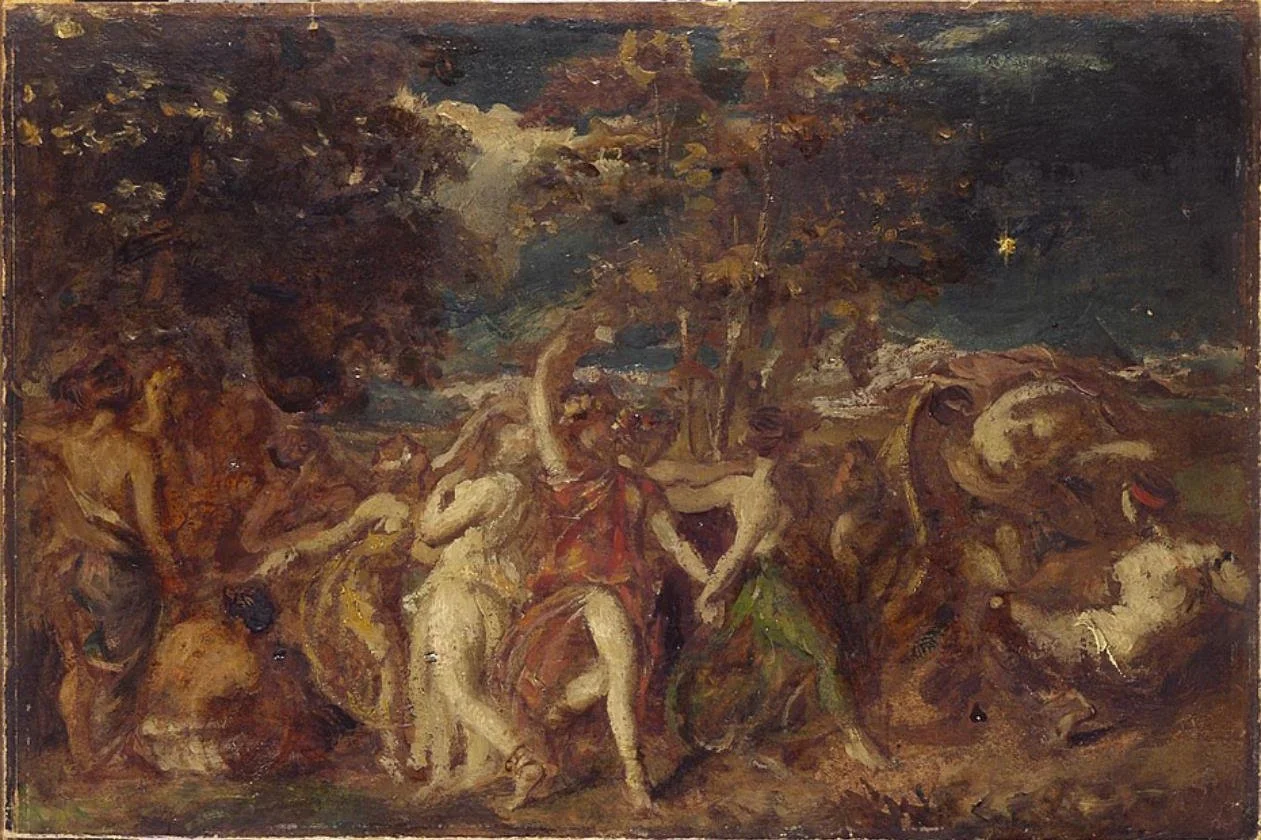
“The World Before the Flood (sketch)” by William Etty, c. 1828
“The LORD saw that the wickedness of man was great in the earth, and that every intention of the thoughts of his heart was only evil continually. And the LORD regretted that he had made man on the earth, and it grieved him to his heart.”
The Torah describes the generation before the Flood as thoroughly entrenched in corruption, immorality, theft, and violence. The hearts of humankind had been given over to “only evil continually,” and the earth itself had become “filled with violence” (Genesis 6:11).
The Flood comes, and that corrupt generation is swept away. After the Flood, HaShem still says, “The inclination of man’s heart is evil from his youth” (Genesis 8:21).
The deeper problem of the human heart still remains.
The question before us is: What are we supposed to do with a heart that can so easily lead us astray?
A midrash on Genesis 8:21 gives us an answer. Many English translations say that HaShem “said to Himself,” or simply “God resolved.” The Hebrew literally says, “HaShem said to His heart”:
“And HaShem smelled the pleasing aroma, and HaShem said to His heart, ‘I will never again curse the ground because of man.’”
— Genesis 8:21
The sages notice this wording and read several other passages with the same attention. Psalm 14:1 says, “The fool has said in his heart.” Genesis 27:41 says, “Esav said in his heart.” First Kings 12 says of the wicked king Yerovam (Jeroboam), “He said in his heart.” Esther 6:6 says, “Haman said in his heart.”
From this pattern, the midrash says that “the wicked are under the control of their hearts.”
It then points to a pattern among the righteous. Hannah “spoke at her heart” (1 Samuel 1:13). David “said to his heart” (1 Samuel 27:1). Daniel “put to his heart” (Daniel 1:8). And here in Genesis, “HaShem said to His heart.”
The midrash concludes:
“The righteous have their hearts under their control.”
— Bereshit Rabbah 34:10
HaShem knows the human heart and knows that “the inclination of man’s heart is evil from his youth.” The pattern identified by the midrash teaches us to lead and direct our hearts under HaShem.
To understand what that means, it helps to understand what the Bible means by “the heart.” In biblical Hebrew, the term heart—lev or levav—refers to the whole inner life: our thoughts, understanding, intentions, desires, emotions, and moral decisions. In everyday English, we often use “heart” mainly for emotions and feelings such as love, hatred, sadness, and joy. Biblical Hebrew gathers thought, feeling, desire, intention, and moral choice into this larger idea of the heart.
Learning to rule over our hearts means learning to bring our entire inner life under the direction of HaShem.
Our Master Yeshua teaches:
“For from within, out of the heart of man, come evil thoughts, sexual immorality, theft, murder, adultery, coveting, wickedness, deceit, sensuality, envy, slander, pride, foolishness. All these evil things come from within, and they defile a person.”
— Mark 7:21–23
These are the inclinations that corrupted the generation of the Flood. Each of us still contends with such inclinations today. With HaShem’s help, we must learn to recognize them, govern them, and direct our inner lives toward what is good.
Gregory of Nyssa, a bishop and early church father from the late fourth century, teaches that desire, anger, love, and the other passions can be governed and directed toward what is noble. He describes reason as “employing them as a king does his subjects’ many hands.” The spiritually mature person “holds them in his own power instead of being held in theirs” (On the Soul and the Resurrection).
Ruling the heart also requires us to pay attention to what we allow to fill it. Yeshua tells us, “Out of the abundance of the heart his mouth speaks” (Luke 6:45). Our words and actions reveal what we have been accumulating within. What fills our hearts eventually comes out. This is why Proverbs tells us, “Guard your heart with all vigilance, for from it flow the springs of life” (Proverbs 4:23).
I’ve noticed this in my own life. The longer I scroll on Facebook, read the news, or listen to political commentators, the more easily I become depressed, anxious, or fearful. What I continually give my attention to begins to shape what is happening within me. Time spent studying Torah, praying, and reading the words of our Master and his righteous Apostles has a formative effect as well. I find myself becoming more peaceful, stable, and mindful of the purpose HaShem has given me.
The story of Noach gives us a beautiful picture of how we can begin to guard and direct the heart.
The Hebrew word for the ark is teivah. In later Hebrew, teivah can also mean “word,” and the Baal Shem Tov draws a spiritual lesson from this wordplay. When HaShem tells Noach to enter the teivah, the Baal Shem Tov sees an invitation to enter fully into the words of Torah and prayer. Just as Noach entered the ark for shelter amid the floodwaters, we can immerse ourselves in holy words and allow them to guard and shape our hearts.
(Read the Baal Shem Tov's teaching on Noach and the teivah.)
Reflect today on what you have been filling your heart with. What has been shaping your thoughts, desires, and reactions? What consistently feeds anxiety, anger, or fear within you? What helps lift your heart toward what is noble and good?
Give your heart something holy to dwell upon. Enter into the words of Torah and prayer. Spend time with the words of our Master. Allow them to surround you, steady you, and shape what is happening within.
In Genesis 6, when HaShem saw the wickedness of man’s heart, the Torah tells us something profound: “The LORD regretted that he had made man on the earth, and it grieved him to his heart” (Genesis 6:6).
The condition of our hearts matters to HaShem because we matter to Him.
The Psalmist tells us, “The LORD takes pleasure in those who fear him, in those who hope in his steadfast love” (Psalm 147:11). Our hearts still struggle with sinful inclinations. As we learn to govern them, walk in His ways, and place our hope in His steadfast love, we can become people in whom our Father takes delight.
Father in heaven, guard our hearts and teach us to direct them toward You. Fill us with Your words, keep us on Your path, and give us Your wisdom. Help us to govern our thoughts, desires, and passions in godliness. Form in us hearts that love You, fear Your Name, and reflect the character of our Master Yeshua. Amen.